Records, retention and the basement problem
Every long-tenanted office has a room nobody opens. A relocation is the only realistic chance you will ever get to fix it.
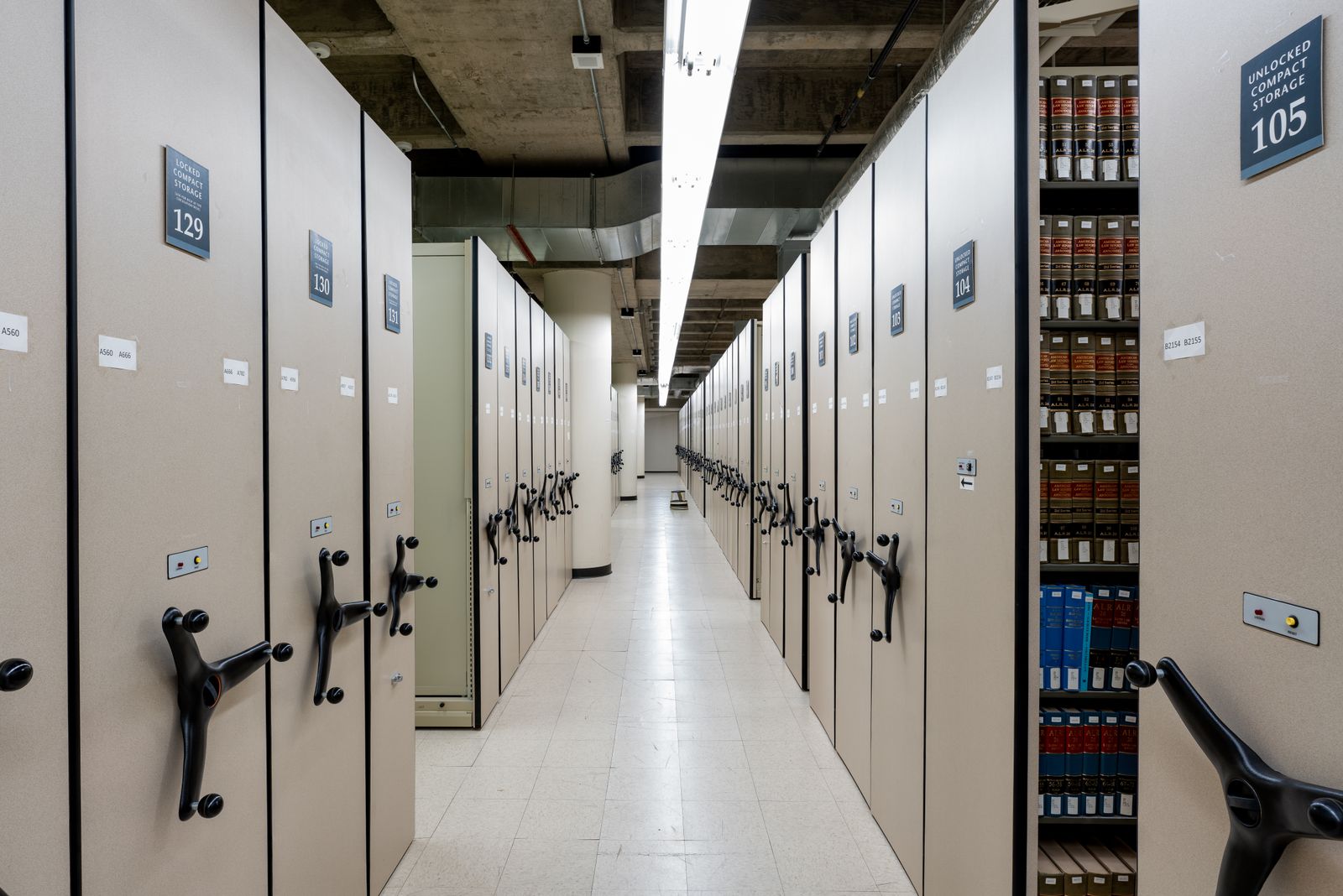
Somewhere in most offices that have been in the same tenancy for more than a decade, there is a room, or a basement bay, or a compactus nobody has opened since a staff member who left in 2014 last filed something in it. It contains a mixture of records you are legally required to keep and records you should have destroyed years ago, and nobody can tell which is which without opening every carton.
A relocation is the only realistic opportunity to fix this, because it is the one moment when somebody has to touch every carton anyway.
Move the problem, or solve it
You have two options and they cost very different amounts. Option one is to move the room as-is: load it, freight it, and put it in a basement at the new address. It is cheap on the weekend and expensive forever, because you have now paid to relocate cartons you are not allowed to keep, and you still cannot find anything.
Option two is to catalogue on the way out. Every carton is barcoded, its contents summarised, and a retention date attached by your records officer before it moves. You still pay to move most of it. You do not pay to move the part that should have been destroyed, and on the other side you have an inventory instead of a basement.
On a school administration relocation last year, 1,190 cartons went into the process and 872 came out the other side, with 318 destroyed on written authority. That is a quarter of the volume that never had to be freighted, stored, or shelved.
Custody starts where the records are
If chain of custody matters to you, and for patient files, client files, personnel records and statutory registers it should, then it has to start in your file room and not at our depot. A chain that begins after the cartons have already travelled is not a chain.
- Cartons are barcoded and scanned on close, in your tenancy, with a contents summary recorded against the barcode.
- Two-person uplift with a signed handover sheet, counted against the inventory before anything leaves the floor.
- At the depot, every carton is scanned to an aisle, bay, shelf and position. Nothing is 'somewhere in row four'.
- Retrieval requests are accepted only from named authorisers on your account, and every retrieval is logged with requester, time, barcode and delivery signature.
Retention is your call, not ours
We are removalists. We are not your record-keeping advisers, and we will not tell you how long to keep anything. Retention periods differ by record type and by the legislation that applies to your organisation, and some series run seven years or considerably longer.
What we will do is build the dates you give us into the inventory, put them on your monthly statement, and prompt you when something passes its destruction date. Nothing is ever destroyed on a calendar trigger alone. It requires written authority from a named person, every single time, and you receive a certificate listing every barcode destroyed rather than a line saying one pallet of files.
The equipment version of the same problem
Assets have exactly the same failure mode. Most organisations discover during a relocation that their asset register has drifted: monitors that were written off three years ago are still on desks, and devices on the register no longer exist.
The fix is the same discipline. Asset tag, serial number and a condition photo captured at uplift; destination workpoint or rack position recorded against each asset; an exception report within 24 hours of delivery for anything that does not reconcile. You get a clean register on the other side, which is a far better outcome than a move that merely did not lose anything.
Where to start
Six to eight weeks out, walk the storage areas with whoever owns records in your organisation and count linear metres. Then decide, explicitly, whether you are moving the problem or solving it. Both are legitimate answers. What is not legitimate is arriving at the question on the Thursday of pack week, when the only available decision is to load the lot.
More relocation notes
Standards
What AFRA accreditation actually guarantees, and what it does not
Every removalist in Australia says they are fully insured. Accreditation is the only claim on that truck that someone else has checked. Here is exactly how far it goes.
Read
Cover
Transit cover, public liability and the word 'insured'
Two different policies, two different purposes, and one word that gets used for both. The distinction decides who pays when a monitor arrives in three pieces.
Read
IT and comms
The comms room decides your weekend
Furniture can be moved twice. A network cutover cannot. Why the destination comms room is the first thing we check and the last thing most plans consider.
Read